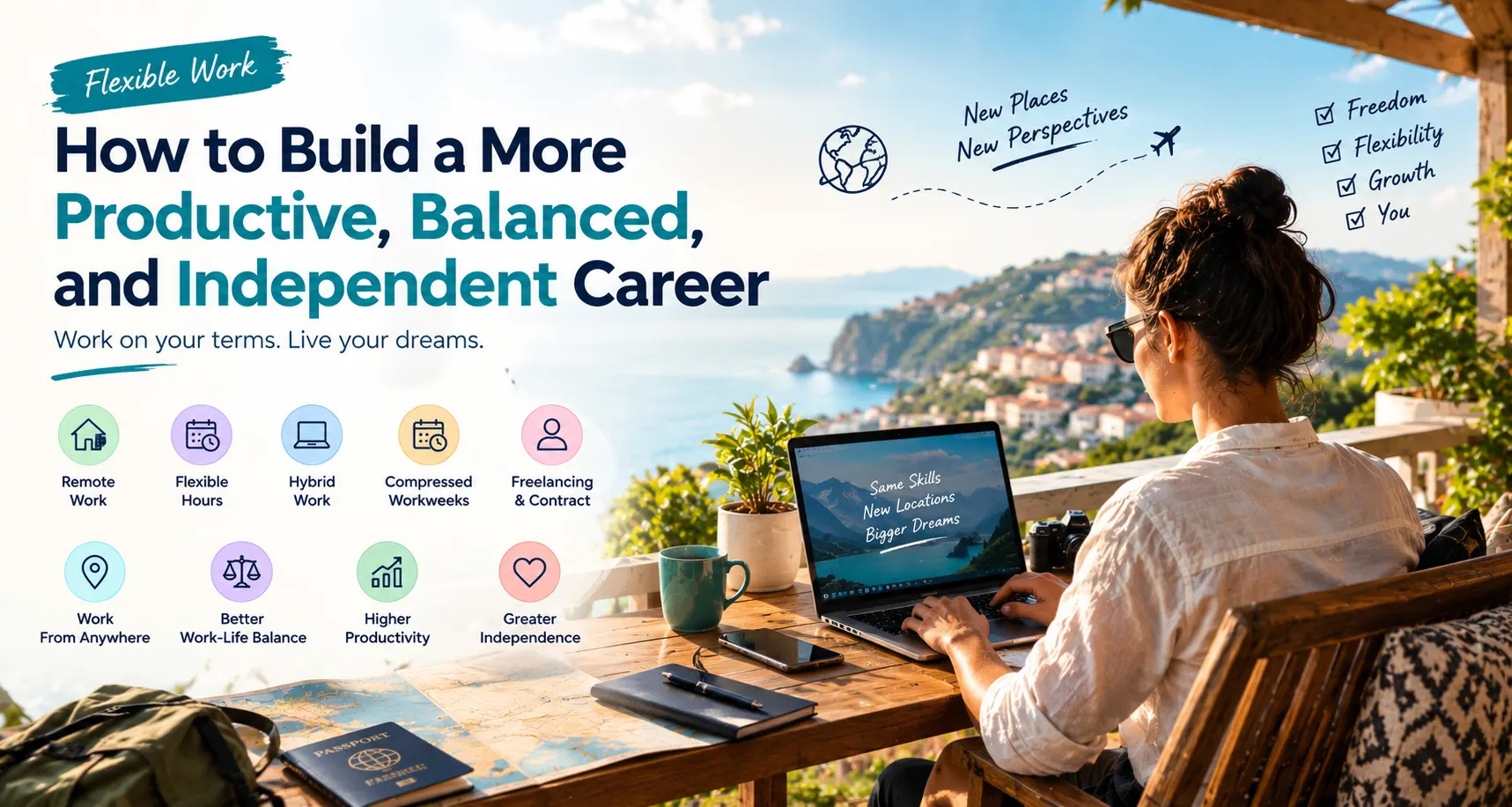
Flexible Work: How to Build a More Productive, Balanced, and Independent Career
Flexible Work: How to Build a More Productive, Balanced, and Independent Career
The traditional idea of working fixed hours from the same office every day is changing. Today, many professionals and businesses are adopting new approaches that give employees greater freedom over when, where, and how they work.
This approach is often known as flexible work.
Flexible work allows people to adjust their working arrangements based on their responsibilities, productivity preferences, location, and personal circumstances. It may involve remote work, flexible schedules, hybrid work, compressed workweeks, or other arrangements that provide more control over the working day.
But flexible work is about more than simply working from home. A successful flexible work lifestyle requires communication, discipline, time management, technology, and clear expectations.
What Is Flexible Work?
Flexible work is a working arrangement that gives employees or professionals greater control over aspects of their work, such as their location, working hours, or schedule.
Instead of following a rigid structure, flexible work allows people to complete their responsibilities in a way that better fits their professional and personal needs.
Common examples of flexible work include:
- Remote work
- Hybrid work
- Flexible working hours
- Part-time work
- Compressed workweeks
- Flextime
- Job sharing
- Flexible schedules
- Freelancing
- Contract work
- Results-orientated work arrangements
The key idea is greater flexibility in how work gets done.
Why Are People Choosing Flexible Work?
There are several reasons why flexible work is becoming increasingly attractive to professionals.
1. Better Work-Life Balance
One of the biggest advantages of flexible work is the ability to better manage professional and personal responsibilities.
Employees may have more freedom to organise their schedules around family responsibilities, exercise, appointments, hobbies, or other priorities.
For example, someone may start work earlier so they can finish earlier in the afternoon, while another professional may prefer working later in the day.
2. Greater Location Freedom
Some flexible work arrangements allow professionals to work outside a traditional office.
Depending on the employer and role, employees may work from home, coworking spaces, or other suitable locations.
This can reduce commuting time and give workers more control over their working environment.
3. Improved Productivity
Different people are productive at different times and in different environments.
Flexible work can allow employees to structure their working day around periods when they can concentrate most effectively.
For some professionals, this may mean completing focused work in the morning. Others may perform better later in the day.
4. Reduced Commuting
Traditional office work can require significant time spent traveling between home and the workplace.
Flexible and remote working arrangements can reduce the need for daily commuting, potentially giving workers more time for work, family, rest, or personal activities.
5. Greater Independence
Flexible work often requires professionals to take greater responsibility for managing their time and priorities.
Instead of being focused only on when someone is physically present at work, flexible arrangements can place more emphasis on completing responsibilities and achieving results.
Types of Flexible Work
Flexible work can take many different forms.
Remote Work
Remote work allows professionals to perform their jobs outside a traditional office.
Depending on the role, employees may work entirely remotely or only work remotely on certain days.
Hybrid Work
Hybrid work combines remote work with office-based work.
For example, an employee might work from home several days a week and visit the office on other days for meetings, collaboration, or team activities.
Flexible Hours
Flexible hours allow employees to adjust their start and finish times within agreed boundaries.
For example, instead of working from 9 AM to 5 PM, an employee might have the option to work from 8 AM to 4 PM or 10 AM to 6 PM.
Compressed Workweek
A compressed workweek allows employees to complete their normal working hours across fewer working days.
For example, someone might work longer days from Monday to Thursday instead of working five standard days.
Part-Time Work
Part-time arrangements allow professionals to work fewer hours than a traditional full-time schedule.
This can be useful for people balancing work with education, family responsibilities, personal projects, or other commitments.
Freelancing and Contract Work
Freelancers and contractors often have greater control over their schedules and working arrangements.
They may work with multiple clients and organise their time around deadlines and project requirements.
How to Build a Flexible Work Lifestyle
Flexible work does not happen automatically. Building a sustainable arrangement requires planning and good working habits.
Step 1: Identify Your Ideal Working Style
Start by understanding how you work best.
Consider:
- When are you most productive?
- Do you prefer working from home or an office?
- Do you need quiet periods for focused work?
- How much collaboration do you need?
- Would flexible hours improve your productivity?
- How much structure do you need?
Understanding your preferences can help you choose a flexible arrangement that actually works for you.
Step 2: Develop Remote-Friendly Skills
If you want greater flexibility, developing skills that can be delivered digitally can increase your opportunities.
Examples include:
- SEO
- Content writing
- Digital marketing
- Web development
- Graphic design
- Software development
- Online consulting
- Project management
- Social media management
- Data analysis
- Online teaching
The more effectively your work can be completed using digital tools, the more opportunities you may have for flexible working arrangements.
Step 3: Choose the Right Work Arrangement
Not every flexible work model is suitable for every person.
You may prefer fully remote work if you value location independence. Hybrid work may be better if you enjoy face-to-face collaboration.
Similarly, flexible hours may be ideal if your productivity varies throughout the day.
The goal is to choose an arrangement that supports both your professional responsibilities and personal priorities.
Step 4: Create a Dedicated Workspace
A flexible work environment still needs structure.
Create a workspace where you can concentrate and separate professional activities from personal life.
Your workspace could be:
- A home office
- A dedicated desk
- A coworking space
- A quiet room
- Another reliable professional environment
A consistent workspace can make it easier to transition into work mode.
Step 5: Build a Daily Routine
Flexibility does not mean working without a schedule.
A simple routine can help maintain productivity.
A typical flexible workday might include:
Morning: Planning, exercise, and focused work
Midday: Meetings, collaboration, and administrative tasks
Afternoon: Project work and completing priorities
Evening: Personal activities, exercise, family time, or relaxation
The exact routine depends on the person’s role, schedule, and responsibilities.
The Challenges of Flexible Work
Flexible work provides many advantages, but it also comes with challenges.
Maintaining Discipline
Without a traditional office environment, it can sometimes be difficult to stay focused.
Creating clear working hours, daily priorities, and deadlines can help maintain discipline.
Communication
Remote and flexible teams need effective communication.
Employees may need to use tools such as video meetings, messaging platforms, project management systems, and email to stay connected.
Clear communication becomes especially important when team members work different schedules.
Work-Life Boundaries
One of the biggest challenges of flexible work is knowing when to stop working.
When your workplace is also your home, professional tasks can easily extend into personal time.
Creating clear boundaries can help prevent work from taking over the entire day.
Isolation
Working remotely or independently can sometimes reduce social interaction.
Regular team meetings, coworking spaces, professional communities, and in-person activities can help maintain social connections.
Time Management
Flexible schedules require strong time-management skills.
Without a fixed structure, it can be tempting to postpone important tasks or spend too much time on less important activities.
Prioritizing work and setting realistic deadlines can help.
Flexible Work and Productivity
Flexible work can change the way people think about productivity.
Traditional workplaces may place significant emphasis on working a specific number of hours in a particular location. Flexible work can instead focus more heavily on outcomes, responsibilities, deadlines, and completed projects.
For professionals, this means learning to manage priorities independently.
Useful productivity habits include:
- Setting daily goals
- Prioritizing important tasks
- Blocking time for focused work
- Limiting unnecessary meetings
- Taking regular breaks
- Using digital productivity tools
- Communicating availability clearly
- Reviewing progress regularly
The goal is not simply to work more hours. It is to use working time effectively.
How Much Flexibility Do You Need?
There is no single definition of the perfect flexible work arrangement.
One professional may want complete location independence, while another may simply want the ability to adjust their start and finish times.
Before choosing an arrangement, consider your responsibilities and lifestyle.
A simple framework is:
Flexible Work Needs = Working Hours + Location + Responsibilities + Communication + Personal Priorities
For example, someone with family responsibilities may prioritise flexible hours, while a digital professional may prioritise location independence.
The best arrangement is one that provides flexibility without reducing productivity or creating unnecessary stress.
Is Flexible Work Right for You?
Flexible work can provide greater freedom and control, but it requires responsibility.
You need to be comfortable with:
- Managing your own time
- Working independently
- Communicating clearly
- Meeting deadlines
- Staying productive
- Setting boundaries
- Using digital tools
- Adapting to changing schedules
If you value independence, flexibility, productivity, and greater control over your working life, flexible work may be worth exploring.
Flexible Work and the Future of Work
The future of work is becoming increasingly diverse.
Traditional office-based jobs are likely to continue, but professionals may also have access to remote, hybrid, flexible-hour, freelance, and other work arrangements.
This creates new opportunities for people to design careers around their skills and personal priorities.
Businesses can also benefit from flexible work by creating working environments that focus on productivity, collaboration, employee needs, and business outcomes.
The most effective approach will depend on the organisation, industry, role, and individual worker.
Final Thoughts
Flexible work represents a shift away from rigid working structures toward greater freedom in how, when, and where work is completed.
It can help professionals create better work-life balance, reduce commuting, improve independence, and organise their working day around their personal productivity.
However, flexibility does not mean a lack of responsibility. Successful flexible workers still need valuable skills, reliable communication, discipline, time management, and clear boundaries.
Whether you choose remote work, hybrid work, flexible hours, freelancing, or another arrangement, the goal is to create a working lifestyle that supports both professional success and personal priorities.
If you’re interested in exploring different ways professionals can work independently and build greater location freedom, continue with our guide to Global Digital Nomads: The Ultimate Guide to Working and Living Around the World.

Related Post

Global Digital Nomads

Digital Nomads Lifestyle: How to Build a Life of Freedom, Travel, and Remote Work
Digital Nomads Lifestyle: How to Build a Life of Freedom, Travel, and Remote Work
Personal Branding Mistakes Nomads Make (And How to Avoid Them)